 Home Phantom at the Alabama History About the Film About the Mighty Wurlitzer Tickets Links & Sponsors |
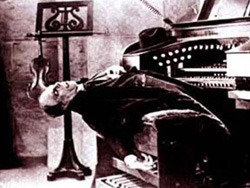
 History of "The Phantom of the Opera" At the Alabama Theatre December 26, 1927 brought a spectacular sight, and an even more spectacular sound to the first patrons of the Alabama Theatre, as its Wurlitzer theatre pipe organ rose from the orchestra pit and began to play. For a few years, the organ was the star of the show -- accompanying silent films, and playing solo performances. But very soon, movies would include sound -- and these "talkies" no longer had need for organ accompaniment. Fortunately for the Alabama Wurlitzer, legendary organists including Stanleigh Malotte kept the organ playing with solo performances and movie overtures. But it would not last forever. By the late 1960s, the Mighty Wurlitzer sat silent, covered, and neglected. Members of the Southeastern (now Atlanta) Chapter of the American Theatre Organ Society (ATOS) visited the Alabama, and obtained permission from theatre management to begin rebuilding and repairing the instrument, affectionately known as "Big Bertha". Others became intersted in the restoration, and in February 1973, the Alabama Chapter of the American Theatre Organ Society was formed, which has maintained the organ ever since. Some of the volunteers who maintain the Wurlitzer today, began working on her in 1969. In 1976, the Alabama Chapter of ATOS, having made substantial headway with the restoration of the Wurlitzer, held their first showing of the 1925 silent film The Phantom of the Opera, a starring Lon Chaney. Accompaning the film was organist Tom Helms of Pensacola, Florida, who wrote his own original score for the movie. The movie and Helms have been back every year since then except 1981, when he performed it in Knoxville and New Orleans. In 1986, the Alabama Theatre fell on hard times, and the owners of the theatre filed for bankruptcy. The Alabama Theatre and its Wurlitzer organ faced an uncertain fate. Undaunted, Alabama ATOS decided it would undertake the yeoman's task of raising the necessary financing to purchase the theatre, in order to save it and the organ. With an enormous showing of community support, the chapter succeeded, and on May 6, 1987, Birmingham Landmarks Inc., the corporation formed to operate the Alabama, assumed ownership. One might say that The Phantom of the Opera is the "Show that started the show", since the program had begun some eleven years prior. "Big Bertha" survives as one of the very few theatre organs in the world still installed in its original home. Organists from around the world have played and recorded albums on "Bertha", and you can find many of these recordings in our Online Store. As a living, breathing (literally) instrument, she requires many thousands of dollars per year, plus many thousands of hours of volunteer labor, to maintain. Proceeds from this year's Phantom will help us achieve that goal, and preserve her sound for years to come. The end result of the decades of love and care the organ has received is evident from the beautiful and dynamic sounds the instrument is capable of producing. As the old saying goes... "Meet Me At The Alabama", and see for yourself! |